logo
Dom Nowości

wiadomości o firmie Perfect 5B at Line-Off, But Peeling After 85/85 Testing? The Truth Behind Battery Casing UV Coating Failures

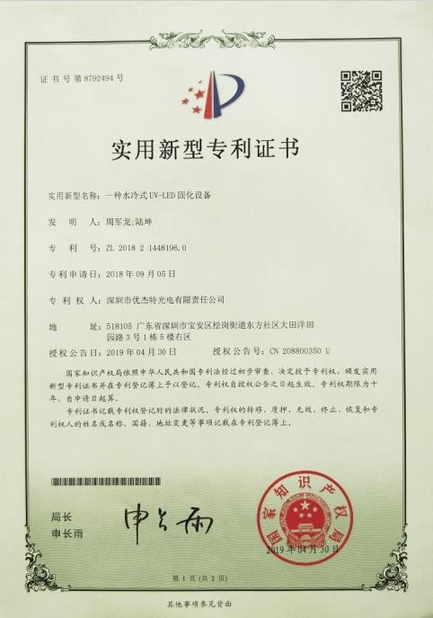
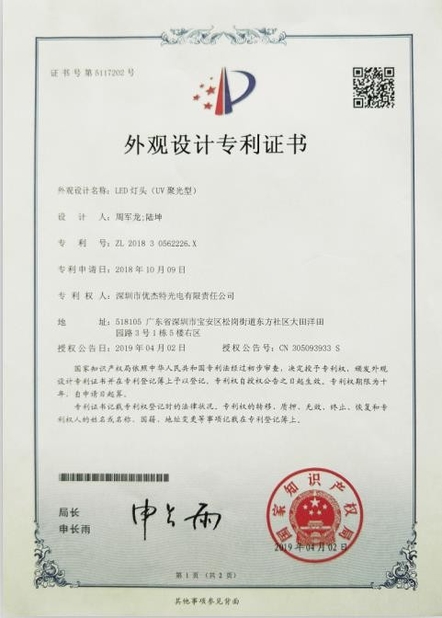
Orzecznictwo
Chiny Shenzhen Super- curing Opto-Electronic CO., Ltd Certyfikaty
Opinie klientów
Współpracujemy od dawna, to dobre doświadczenie.

—— Mikrofon

Mamy nadzieję, że wkrótce będziemy mogli współpracować.

—— Bok

Bardzo podoba mi się twoja latarka leduv, jest ręczna i bardzo łatwa w obsłudze.

—— Christophe

Lampa UV znacznie poprawia wydajność naszej maszyny do sitodruku, jest świetna!

—— Alfie

Jakość urządzenia do utwardzania UV jest doskonała; używam go od ponad roku bez żadnych problemów.

—— Oliwier

Ta lampa jest idealna do utwardzania sitodruku na naszym opakowaniu. Uwielbiam ją.

—— Ethan.

Lampy UV LED tej firmy są niezwykle stabilne. Używamy ich do naszej linii łączenia ekranu dotykowego, a konsystencja utwardzania jest doskonała.

—— Dawid

Stworzyli idealne rozwiązanie do utwardzania UV o długości 365 nm dla naszej automatycznej linii produkcyjnej.

—— Elena.

Im Online Czat teraz
firma Nowości
Perfect 5B at Line-Off, But Peeling After 85/85 Testing? The Truth Behind Battery Casing UV Coating Failures
najnowsze wiadomości o firmie Perfect 5B at Line-Off, But Peeling After 85/85 Testing? The Truth Behind Battery Casing UV Coating Failures

Perfect 5B at Line-Off, But Peeling After 85/85 Testing? The Truth Behind Battery Casing UV Coating Failures

In EV battery casing production, engineers often face a common pitfall: a UV insulating coating achieves a top-tier 5B cross-hatch rating right off the line, yet completely peels off after 500 hours of 85°C / 85% RH (Double 85) damp heat testing.

A 5B rating proves it sticks now; 85/85 testing proves if it stays bound. Overcoming delamination requires addressing three key factors:

najnowsze wiadomości o firmie Perfect 5B at Line-Off, But Peeling After 85/85 Testing? The Truth Behind Battery Casing UV Coating Failures  0

  1. Internal Stress Release: Formulations optimized for extreme hardness carry high cross-linking density and heavy residual stress. Under damp heat, moisture ingress and CTE mismatch trigger stress release, leading to debonding.

  2. Hydrolytic Degradation: Adhesion promoters (e.g., silanes, phosphate esters) with insufficient water resistance hydrolyze and lose chemical bond strength over time.

  3. Production Line Variables: Residual oils, incomplete degreasing, or unstable oxide layers weaken initial wetting, magnifying interfacial defects during aging.


How UV Curing Equipment Helps:

  • Gradient Curing to Relive Stress: Multi-wavelength (e.g., 365 nm + 395 nm) LED UV systems allow a "pre-cure + main cure" process, giving polymer chains time to reorient and significantly reducing shrinkage stress.

  • Deep Interfacial Cure: Longer wavelengths (395 nm / 405 nm) penetrate deeper to ensure complete reaction at the substrate interface, eliminating under-cured boundary layers.

najnowsze wiadomości o firmie Perfect 5B at Line-Off, But Peeling After 85/85 Testing? The Truth Behind Battery Casing UV Coating Failures  1

A 5B rating is merely an entry ticket; zero delamination after aging proves true reliability. Achieving high battery safety standards requires the perfect synergy of chemistry, surface preparation, and advanced UV LED curing technology.

Pub Czas : 2026-09-19 16:52:53 >> lista aktualności
Szczegóły kontaktu
Shenzhen Super- curing Opto-Electronic CO., Ltd

Osoba kontaktowa: Mr. Eric Hu

Tel: 0086-13510152819

Wyślij zapytanie bezpośrednio do nas (0 / 3000)